
On January 15, 2022, Texas singer-songwriter Robert Earl Keen dropped a nine-pound hammer on his fans. “It’s with a mysterious concoction of joy and sadness that I want to tell you as of September 4th, 2022, I will no longer tour and perform publicly,” Keen posted on his webpage. WTF?!? REK not playing live anymore? My mind raced to the worst. “I hope he’s not dying.”
No. It’s nothing like that, Keen wrote. “I’m not sick or experiencing any existential crisis. I feel that making a decision and quitting the road while I still love it, is the way I want to leave it.”
He went on, “As much as I love what I do, it’s more important that I do it well or not at all.”
Oh, I get that. I made the decision to retire from my own job several months before for the same reasons, although to be fair, I was a burned-out, mid-level bureaucrat -not a Texas musical legend. I guess even musical legends get tired of touring after 40 years and just want to go home. Apparently, the road does not go on forever, the party sometimes ends, and they eventually do put a saddle on your crazy cowboy dreams.
Keen may not have been having an existential crisis, but his retirement was causing me one. My relationship with the music and the man went back to 1989 when I read an album review blurb of Keen’s West Textures in the Baltimore City Paper. (If you are of a certain age, you miss the City Paper, if only for the personal and missed connection ads that filled its back pages.) I ripped the review out of the paper, folded it in quarters, and placed it in the billfold of my wallet. I don’t know who wrote it or exactly when it was published, but I’ve re-read it enough that I can paraphrase the better part of it now more than 30 years later.
“I’ll spare you the suspense,” it read, “this album is an out-and-out instant classic. Robert Earl Keen, Jr. is a major talent, and The Road Goes on Forever is a sly party anthem that will be played for many years to come.”
At the time, I liked several other Texas artists like Steve Earle, Nanci Griffith, and Lyle Lovett, but had never heard of this Keen guy before. I looked for West Textures in all my favorite CD stores (remember those?), but they’d never heard of him either. I called in to the folk-themed, local radio show, Detour, and asked the host if he would play some Keen. “Yeah, I’ve got an album of Texas musicians around here somewhere that he plays on,” Tony said. “I could give it a spin.”
That Sunday evening in the spring of 1990, at the kitchen table of an apartment in Cockeysville I shared with my soon-to-be wife, I first heard the plaintive tones of Robert Earl Keen, Jr. It wasn’t exactly love at first listen, but it intrigued me enough to mail order the album from Sugar Hill Records.
It did not disappoint. Except for its first song, Sing One for Sister, all the tracks were either great or really, really great. Ten for eleven is a pretty good batting average and how thoughtful of Keen to put the stinker track first so you could easily skip it when you put the CD in the player.
It was a mix of funny little songs, sweet love songs, thoughtful covers, and of course, The Road Goes on Forever…. And the Party Never Ends. And the production and playing were perfect. It was clean, crisp, acoustic, unpretentious – featuring a fiddle, dobro, upright bass, and guitar. Keen is no Sinatra, but then again, he never tries or pretends to be anything he’s not. And in 1989, that was more than you could say about the rest of the music industry. The top group on the radio the month West Textures was released was Milli Vanilli. In a world of cubic zirconia, Keen was a gem.
I listened to the album a lot. And it inspired me. It inspired me to do something I had never done before in my previous twenty-seven years on this planet. I wrote a fan letter. It was to Keen, and God bless him, he wrote me back. “Geoff,” he scrawled on the back of a postcard, “I get a lot of fan mail, but few letters are as comprehensive as yours. I appreciate how you wrote about my cult status, your life, your family, the music and tied it all together and made it work. I’ve never been to Baltimore, but I’d love to play there if we can find a venue. Best wishes. Robert Earl Keen, Jr.”
A few months later, with great anticipation, I saw him live for the first time. It was November of 1990, and he was sharing the bill with Guy Clark and Townes Van Zandt. I was not familiar with these other Texas troubadours and assumed they were opening for Keen. Nope. What I remember of that evening is Keen going on first, all fresh-faced and beaming, playing like there’s no place on Earth he’d rather be than Alexandria, Virginia on a Friday night. How could someone with just an acoustic guitar be so electric?
And after a short set, Keen gave way to Van Zandt, who gave way to Clark. I was not impressed with the latter two. Not only were they standing between me and my musical pen pal, but frankly, unlike Keen, they looked grizzled and tired. Van Zandt was gaunt. He was wiry and brittle and sang gloomy songs in a reedy voice. Clark was only slightly better. He looked and sounded like a squat Nick Nolte. Between songs, he took big swigs from a bottle of Robitussin he kept by his side, but it didn’t seem to help. They finally brought Keen back for the final encore, veterans throwing the kid a bone.
Before you get all in a lather about the groundbreaking legacies of Van Zandt and Clark, and how a whole generation of Texas singer-songwriters, including Keen, owe their careers to these guys, I will acknowledge that I have since come to greatly appreciate these men and their work. It’s just that on that particular night, they were not what I came to hear.
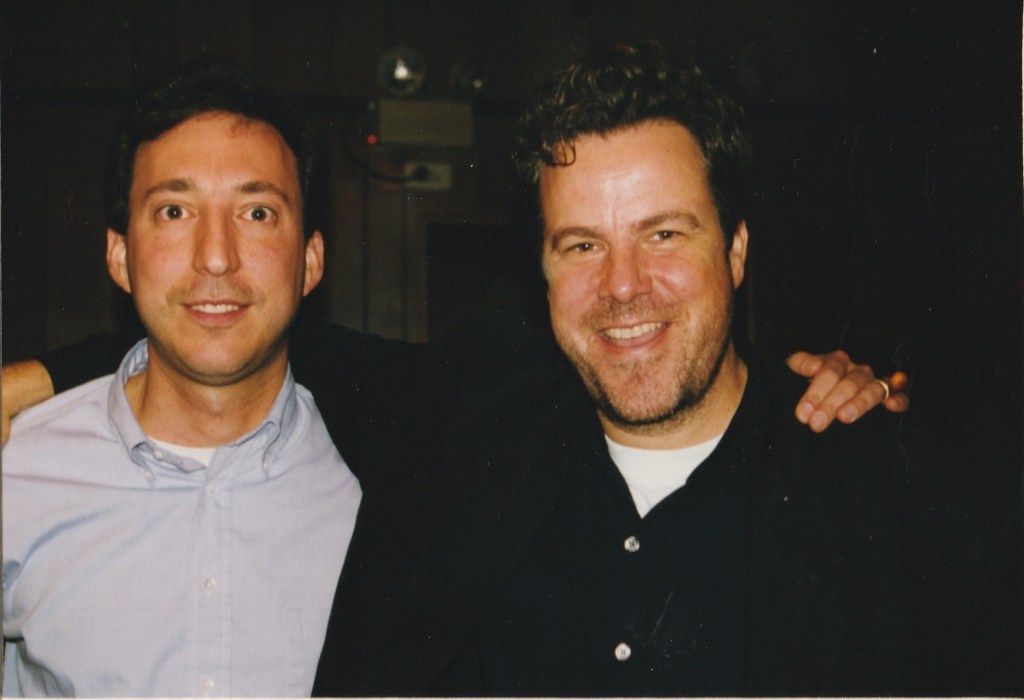
I saw Keen in concert many more times after that and on several occasions had the opportunity to chat with him. He was always gracious and humored me when I excitedly told him that he ought to record an unplugged album or how I named characters in my playwriting after characters in his songs or how Sonny’s lawyers should mount his defense. I was toeing that line between fan and fanatic.
Fast forward to July of 2022, and I found myself sitting in the 18th row of the Brevard Music Center in North Carolina waiting for Keen to take the stage. It’s the homestretch of his last tour before retirement, and I made the road trip for old time’s sake. And here’s where the existential crisis comes in. As I’m sitting there, my mind can’t quite process that 32 years have elapsed since that first show and this one. How is that even possible? It can’t be. It just can’t.
But it was. Keen waddled onto the stage looking every bit of his 66 years. With his white beard, rosy cheeks, paunch, and cowboy hat, he kind of resembled a San Antonio Santa Claus. He plopped himself down on a chair at the center of the stage and there he sat for the entire show. I know he said his health wasn’t a factor in his decision to stop touring, but he looked weathered and worn that night.
Although he sounded good, and he played most of the songs the audience came to hear (The Road Goes on Forever, Gringo Honeymoon, Merry Christmas from the Family, Corpus Christi Bay) with spirited enthusiasm, there was an underlying sadness to the evening. For the audience, comprised mostly of folks who looked a lot more like Keen than they’d probably like to admit, it was like saying farewell to a good friend.
And that’s hard at any age.
 Maryland Roots Music.com
Great writing Geoff! We don’t look as Keen as we once did either.
Tu Amigo Miguel T
LikeLike
You’re just as keen looking as ever.
Geoff
LikeLike